The Tech Revolution Beneath the Waves
For centuries, the ocean has remained largely inscrutable—a vast, alien realm that covers 71% of our planet yet remains more explored than the surface of Mars. But we're entering a pivotal moment. Advanced robotics, machine learning algorithms, and next-generation sensor networks are about to fundamentally reshape our understanding of marine ecosystems, ocean chemistry, and the creatures that inhabit the deep.
This technological convergence isn't merely academic. As climate change accelerates and human activity intensifies, having a detailed scientific understanding of ocean dynamics has become critical to our species' survival. The question is: can innovation outpace destruction?
Autonomous Systems Diving Where Humans Cannot
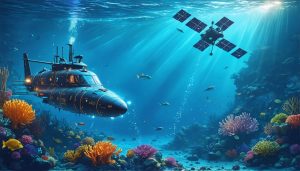
Traditional oceanography relied on expensive research vessels and limited human diving expeditions—approaches that constrained both the scope and frequency of deep-sea exploration. Enter autonomous underwater vehicles (AUVs) and remotely operated vehicles (ROVs), which are becoming increasingly sophisticated.
These mechanical explorers can operate at depths exceeding 11,000 meters, endure extreme pressure and cold, and remain operational for months at a time. Modern AUVs equipped with AI systems can navigate complex underwater terrain, identify biological specimens, and collect data without human intervention. This means researchers can now study previously inaccessible regions of the ocean floor—hydrothermal vents, abyssal plains, and underwater canyons—with unprecedented detail and consistency.
The Data Revolution
What makes these autonomous systems truly transformative is their data-gathering capacity. Modern AUVs and ROVs are equipped with high-resolution cameras, spectral imaging sensors, water sampling mechanisms, and acoustic mapping technology. The volume of raw data these systems generate is staggering—and that's where artificial intelligence enters the picture.
Machine learning algorithms are now being deployed to process massive datasets in real-time, identifying patterns and anomalies that would take human researchers years to spot manually. From tracking bioluminescent organisms to monitoring microplastic distribution, AI is accelerating the pace of discovery exponentially.
Satellites and Surface Intelligence
The revolution isn't limited to underwater systems. Space-based observation platforms are providing complementary insights into ocean health. Modern satellite networks can detect sea surface temperature variations, measure chlorophyll concentrations, track ocean currents, and even identify phytoplankton blooms with remarkable precision.
When integrated with subsurface data from autonomous vehicles, satellite observations create a holistic picture of ocean behavior—from the surface down to the crushing depths. This multi-layered approach reveals connections between atmospheric conditions, nutrient cycling, and marine biodiversity that were previously invisible.
The Biodiversity Question
Perhaps the most compelling aspect of this technological leap is what it's revealing about ocean life itself. Researchers estimate that we've cataloged only 5% of marine species. As exploration technology improves, scientists are discovering entirely new ecosystems—bioluminescent forests, extremophile communities thriving near underwater volcanoes, and previously unknown species at an accelerating rate.
These discoveries aren't just scientifically thrilling; they underscore just how little we understand about the systems that regulate Earth's climate and produce half of our oxygen.
The Conservation Imperative
Here's where technological optimism collides with hard reality. Advanced knowledge of the ocean means nothing if we lack the will to protect it. Acidification, warming, overfishing, and pollution continue their relentless assault on marine ecosystems.
Scientists involved in ocean exploration technology insist that their tools must serve a dual purpose: not just to satisfy curiosity, but to provide the empirical foundation for conservation policy and enforcement. Real-time monitoring systems can track illegal fishing operations. Detailed bathymetric maps can designate critical habitats for protection. Climate models powered by ocean data can inform policy decisions that actually matter.
The Window Is Closing
The next five to ten years will likely prove decisive. The technology exists. The expertise is concentrated in research institutions and tech companies willing to invest in ocean science. What's needed now is the political will and financial commitment to scale these systems globally.
The ocean's mysteries are finally becoming accessible. The real question isn't whether we can understand our blue planet—it's whether we'll use that understanding to preserve it.