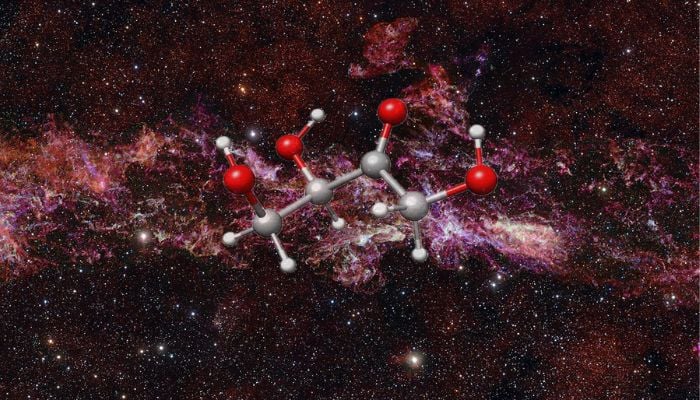
A Sugar Molecule Among the Stars
The universe just got a little bit sweeter. For the first time in astronomical history, scientists have confirmed the presence of erythrulose, a simple five-carbon sugar molecule, lurking in the vast expanses of deep space thousands of light-years from Earth. This remarkable finding represents a significant milestone in astrobiology and our understanding of prebiotic chemistry in the cosmos.
The detection was made using advanced spectroscopic analysis, allowing researchers to identify the distinctive chemical signature of this monosaccharide in interstellar clouds. While scientists have previously theorized that organic compounds should exist throughout space, actually pinpointing such a complex organic molecule has remained elusive until now.
What Makes This Discovery Revolutionary
Expanding Our View of Organic Chemistry in Space
For decades, astronomers have found relatively simple molecules drifting between the stars—hydrogen, carbon monoxide, ammonia, and water. However, erythrulose represents a qualitative leap in complexity. As a monosaccharide, it belongs to the family of organic compounds that form the fundamental building blocks of sugars and carbohydrates, molecules essential to life as we know it.
This detection suggests that the processes necessary to synthesize these moderately complex organic molecules are more common and efficient in space than previously believed. The discovery challenges long-held assumptions about where and how prebiotic chemistry occurs in our universe.
Implications for the Origins of Life
Sugar molecules aren't merely scientific curiosities. Sugars play crucial roles in biological systems: they provide energy, serve as structural components in DNA and RNA, and participate in countless metabolic pathways. The presence of erythrulose in deep space raises fascinating questions about whether the chemical ingredients necessary for life might be more ubiquitous than researchers anticipated.
This finding doesn't definitively prove that life exists elsewhere, but it does suggest that the chemical foundation upon which life builds might be scattered throughout the galaxy, seeded in countless star-forming regions and planetary systems awaiting the right conditions to assemble into living organisms.
The Detection Methods Behind the Breakthrough
Identifying a single molecule among the virtually empty vastness of space requires extraordinary instrumentation and methodology. Astronomers utilized advanced radio telescopes capable of detecting the unique electromagnetic signatures that each molecule emits or absorbs. Erythrulose's specific pattern of atomic vibrations creates a distinctive spectral fingerprint—much like a cosmic barcode—that astronomers can identify.
The research involved meticulous data analysis, cross-referencing observations with laboratory measurements of erythrulose's properties. This painstaking approach is essential because false positives could mislead the entire field, so researchers must achieve absolute certainty before announcing such significant discoveries.
What Comes Next
Searching for Related Compounds
With erythrulose confirmed in space, astronomers will now intensively search for related sugar molecules and other complex organic compounds. The detection provides a roadmap for identifying additional molecules of biological interest, potentially revealing a richer chemical inventory in interstellar space than previously catalogued.
Understanding Formation Mechanisms
Perhaps equally important, scientists must now investigate how erythrulose forms in space. Unlike Earth's laboratories, interstellar environments operate under extreme conditions: near-absolute-zero temperatures, intense radiation, and virtually perfect vacuum. Understanding how complex organic molecules assemble under these hostile conditions could reveal fundamental principles of chemistry itself.
Broader Significance
This discovery arrives at a crucial moment in astrobiology. As NASA and international space agencies intensify their search for extraterrestrial life, understanding the chemical building blocks available in space becomes increasingly vital. The presence of sugar molecules in deep space strengthens the chemical case for the possibility of life beyond Earth, suggesting that planets orbiting distant stars inherit a chemical legacy rich in complex organic compounds.
The detection of erythrulose in deep space represents more than a technical achievement—it's a window into the fundamental chemistry that connects stars, planets, and the potential for life throughout our universe. As observation technology continues advancing, astronomers will undoubtedly discover additional organic molecules, gradually mapping the complete chemical portrait of our cosmos and humanity's place within it.