A Controversial Approval Changes the Space Landscape
In a decision that's already sparking significant controversy within the scientific community, the Federal Communications Commission has authorized Reflect Orbital to launch Eärendil-1, an ambitious space-based mirror satellite designed to reflect sunlight down to Earth's surface at night. The approval marks a pivotal—and contentious—moment in how humanity might reshape nighttime visibility on our planet.
The concept sounds almost poetic: a celestial mirror that transforms nighttime into artificial daylight, eliminating the need for ground-based lighting in select areas. In reality, the implications are far more complex and deeply troubling to those who study the cosmos from Earth.
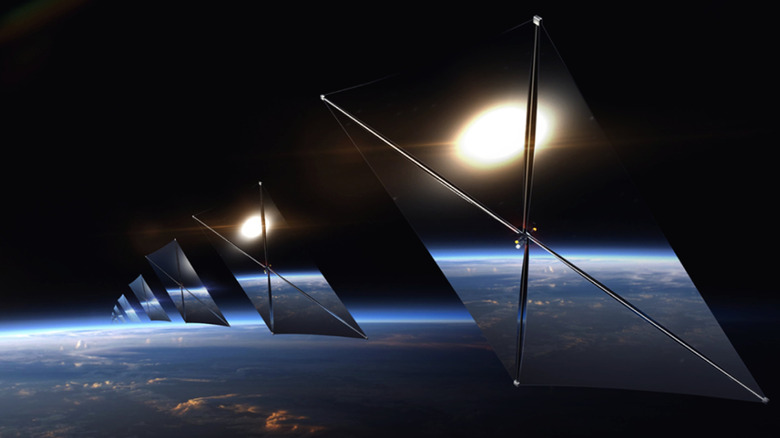
How Eärendil-1 Would Actually Work
Reflect Orbital's satellite operates on a deceptively simple principle. Positioned in orbit, Eärendil-1 would use reflective surfaces to redirect sunlight toward specific locations on Earth's surface during nighttime hours. The company envisions applications ranging from enhanced nighttime visibility for disaster recovery operations to supplementing urban infrastructure during emergencies.
The technical challenge of maintaining orbital positioning, managing reflective angles, and targeting illumination with precision is substantial. Yet proponents argue the technology could revolutionize emergency response capabilities and reduce reliance on traditional energy-intensive lighting systems in critical situations.
The Astronomical Community Pushes Back Hard
Despite the FCC's approval, the reaction from the global astronomy community has been swift and severe. The European Southern Observatory issued a stark warning, stating that the project "poses an existential threat" to optical astronomy. This isn't hyperbole—it reflects genuine concern about the satellite's potential impact on ground-based telescopes and astronomical observation.
The core issue is light pollution. When Eärendil-1 reflects concentrated sunlight onto Earth's night side, it would create artificial illumination that interferes with telescopic observations of distant stars, galaxies, and other celestial phenomena. For astronomers relying on Earth-based observatories to conduct critical research, unexpected artificial light sources represent a fundamental threat to their work.
A Growing Problem in the Orbital Space
Eärendil-1 isn't the first space-based system to generate concern among astronomers. The proliferation of satellite mega-constellations—particularly SpaceX's Starlink network—has already created measurable interference with astronomical observations. Thousands of bright satellites streaking across the night sky have complicated observations and required researchers to develop new mitigation strategies.
A satellite specifically designed to reflect sunlight represents an escalation of this problem. Unlike inadvertent light pollution from communication satellites, Eärendil-1's core function is to produce bright illumination visible from Earth. The potential for systematic, predictable interference with astronomical observations is significant.
Balancing Innovation and Scientific Integrity
This approval illustrates a growing tension in space policy: how regulators balance innovative commercial applications with the preservation of scientific research capabilities. The FCC prioritizes telecommunications and emerging technologies, while astronomical bodies emphasize long-term research impacts.
Reflect Orbital hasn't yet responded comprehensively to the specific concerns raised by the European Southern Observatory and other astronomical institutions. The company's communications have focused primarily on the potential humanitarian benefits of the technology.
What Happens Next
While the FCC has granted approval, Eärendil-1 hasn't launched yet. This window provides an opportunity for meaningful dialogue between the private space sector and the astronomical community. International astronomical organizations continue advocating for stronger protections against orbital light pollution.
The satellite represents a broader challenge facing space governance: ensuring that as commercial ventures increasingly utilize orbital space, they do so in ways that don't compromise scientific capability or Earth-based observation systems that billions of dollars of research depend upon.
Whether Eärendil-1 ultimately launches or undergoes modifications to address legitimate scientific concerns remains to be seen. What's clear is that the era of treating orbital space as an unlimited resource is ending—and regulatory frameworks are struggling to keep pace.